
In the Spirit of Freedom - A Reflection Originally Written in 2018, Revised for 2026
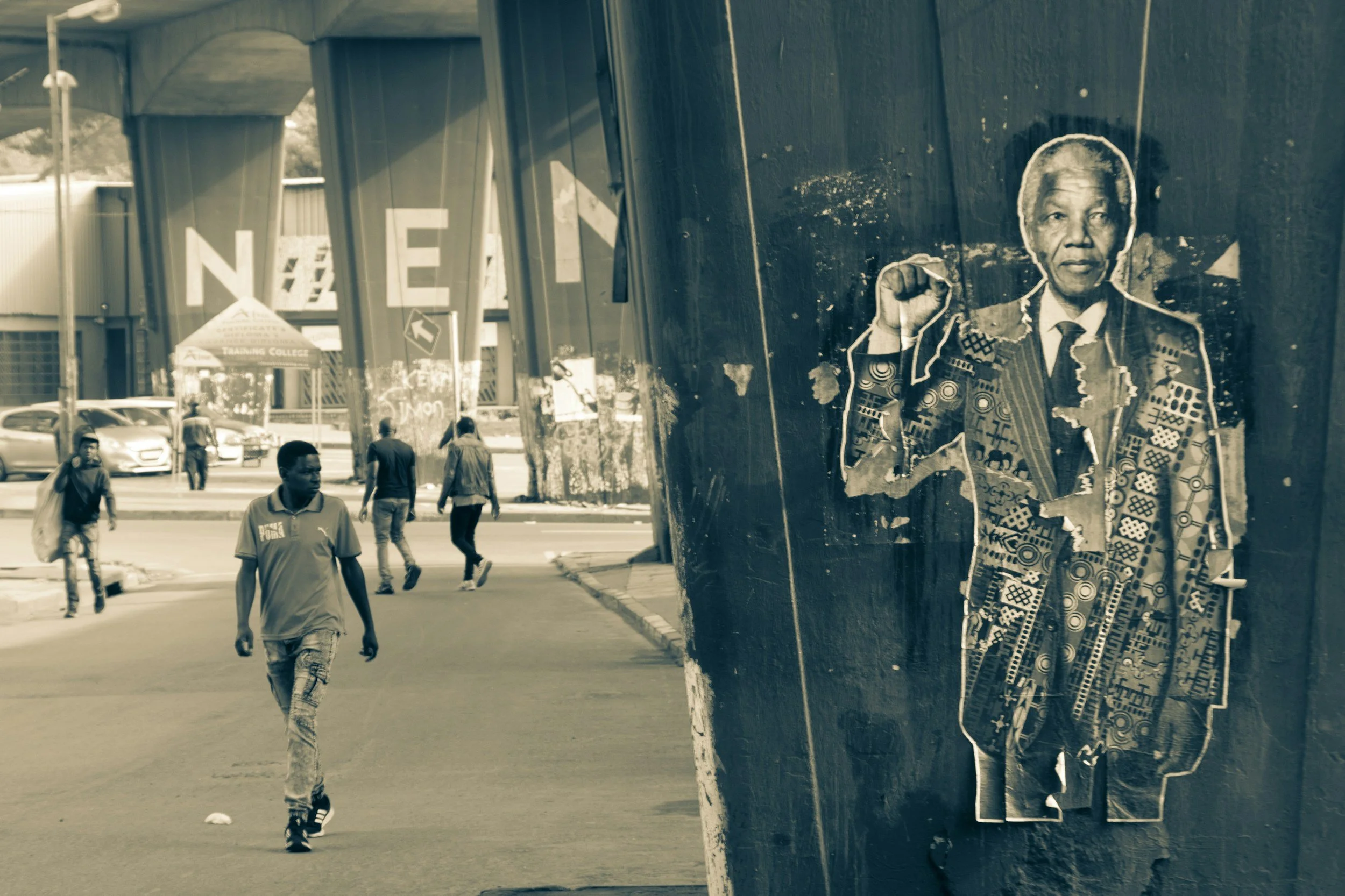
"To be free is not merely to cast off one's chains, but to live in a way that respects and enhances the freedom of others."
— Nelson Mandela
Hi Everyone,
Eight years ago, I wrote this I wrote this reflection for Independence Day. I reread it this week, and while some parts still felt deeply true, other parts reflected the younger man who wrote them. Mostly, I realized that my understanding of freedom has continued to evolve. What follows is a revised version, shaped by the years between then and now.
The older I get, the less certain I become about many things, but the more I care about a few. One of those is freedom. Not freedom as a slogan or a campaign promise, but freedom as a lived experience. What does it actually feel like to be free? And perhaps just as importantly, who do we become when we are even more free than we already are?
Nelson Mandela has always held a special place in my heart. I have carried his words above with me for years because they shift the conversation. Freedom isn't only about my rights or your rights. It's about the quality of relationship we create together.
Part of why those words resonate so deeply is because of where I come from.
My family immigrated from South Africa in 1986. My parents walked away from everything they knew because they wanted peace of mind and believed there was a different kind of future their children waiting for them in America. At the time, I didn't appreciate what that sacrifice meant. at 9 years old, it mostly felt like an adventure, not an easy adventure, but an adventure non the less. Now, as a father myself, I look back with an entirely different kind of gratitude. It takes unbelievable courage to uproot your life, with 3 kids under 10, in search of something you cannot guarantee.
We lived in a middle-class white neighborhood outside Johannesburg during the final years of apartheid. Looking back, the contradictions are striking. We had a comfortable home, a swimming pool, and a yard to play in. Most of our neighbors had similar lives. Yet almost every house was surrounded by towering brick walls topped with electric fencing. Security gates, alarms, bars on the windows, guard dogs...these were simply part of everyday life. I remember hearing about violence, armed robberies, and carjackings with a kind of casual acceptance that now seems astonishing.
Over the years I've often thought about the irony of that. We were, in many ways, the privileged class, yet we also lived inside a culture shaped by fear. We built literal walls to protect ourselves, but they also became psychological walls. Looking back, I sometimes wonder whether fear had imprisoned everyone, just in different ways.
Of course, that fear bears no comparison to what Black South Africans endured under apartheid itself. Apartheid wasn't simply prejudice or social division. It was a legal system designed to strip people of their humanity and their rights. Families were separated, communities were uprooted, opportunities were denied, and nearly every aspect of daily life was shaped by race. I left South Africa before I was old enough to understand the full weight of what was happening around me, but those years have become more meaningful as I've grown older and learned more about the history I briefly lived inside.
Four years after we left, apartheid officially came to an end, and Nelson Mandela walked out of prison after twenty-seven years. Like so many people around the world, I watched that moment unfold from afar. I don't think I understood its significance then. What moves me now is not only what Mandela stood against, but who he became through unimaginable hardship. Somehow, after losing nearly three decades of his life, he emerged with a commitment not only to justice but to reconciliation. That doesn't mean he ignored the past or excused injustice. Rather, he refused to let hatred define his future. To me, that may be one of the greatest acts of freedom I've ever witnessed.
I've spent forty years of my life in America now. In many ways, this is the only home I really know. This country has given me amazing community, friends, meaningful work, the opportunity to build Village Wellness, and the privilege of raising my daughter here. I've never forgotten, though, that I arrived as an immigrant. America wasn't simply the country where I grew up; it was the country my parents chose.
That has shaped the way I think about patriotism. Liking this country has never meant believing it's perfect. It has meant believing, the ideals it was founded upon are worth caring for. Worth protecting. Worth asking to become more fully itself. I think that's what love asks of us - not blind loyalty, but honest participation.
Maybe that's why I've found myself worrying about the state of our country so much these past few years. I worry when public officials undermine democratic norms, when violence becomes an accepted part of political life, when truth becomes something to manipulate rather than pursue, and when whole groups of people are spoken about as though they matter less. I also recognize that many people carry deep frustration, fear, and distrust because they feel unseen or unheard. Those realities deserve compassion too.
What I keep coming back to is this: fear is contagious. It narrows our vision. It invites us to divide the world into "us" and "them." History has shown, again and again, that societies become less free whenever we stop recognizing one another's humanity.
America has always been an unfinished experiment. That, strangely enough, is one of the things I love most about it. Our history is filled with breathtaking ideals alongside profound contradictions. The words, "all men are created equal," were written while slavery still existed. Women couldn't vote. Indigenous peoples were displaced. The promise has always been bigger than the reality.
But that's not where the story ends.
Generation after generation, people have widened that promise. Abolitionists challenged slavery. Suffragists insisted women deserved a voice. The Civil Rights Movement confronted segregation. Labor organizers fought for safer workplaces. LGBTQ+ advocates invited us to broaden our understanding of equality and belonging. Immigrants have continued to renew this country with their courage and hope. Veterans, teachers, journalists, community organizers, disability rights advocates, and countless ordinary citizens have all helped move America a little closer to its highest ideals.
Maybe that's what every generation is asked to do.
For 30 years, I've had the privilege of sitting with people, in the treatment room, in some of the most vulnerable moments of their lives. That work has taught me that healing and freedom have a lot in common. Neither can be forced. Both require honesty. Both require courage. Both ask us to stay present with discomfort rather than running from it. And both invite us into deeper relationship - with ourselves, with one another, and with something larger than ourselves.
Years ago, I ended this reflection by writing that I wanted to be a "freedom founder." I love that.
I don't think I'm here to change the world in some grand way. But I do hope that the people who walk through my treatment space leave carrying just a little more freedom than when they arrived. Maybe they're a little less afraid. Maybe they're breathing a little easier. Maybe they trust themselves a little more. If I can help create that, one person at a time, then I feel like I'm doing my part.
Every generation inherits different kinds of walls. Some are made of brick. Others are made of fear, ideology, prejudice, or indifference. The work, it seems to me, is still the same: to keep widening the circle.
Perhaps that's all freedom has ever asked of us. Not simply to celebrate it once a year, but to practice it every day - in the way we speak, the way we listen, the way we care for one another, and the way we choose courage over fear, curiosity over certainty, and love over division.
Thanks for reading.
With lots of Love,
Lance
Founder of Village Wellness, Acupuncturist, Yoga & Meditation Teacher